Physical Address
304 North Cardinal St.
Dorchester Center, MA 02124
Physical Address
304 North Cardinal St.
Dorchester Center, MA 02124

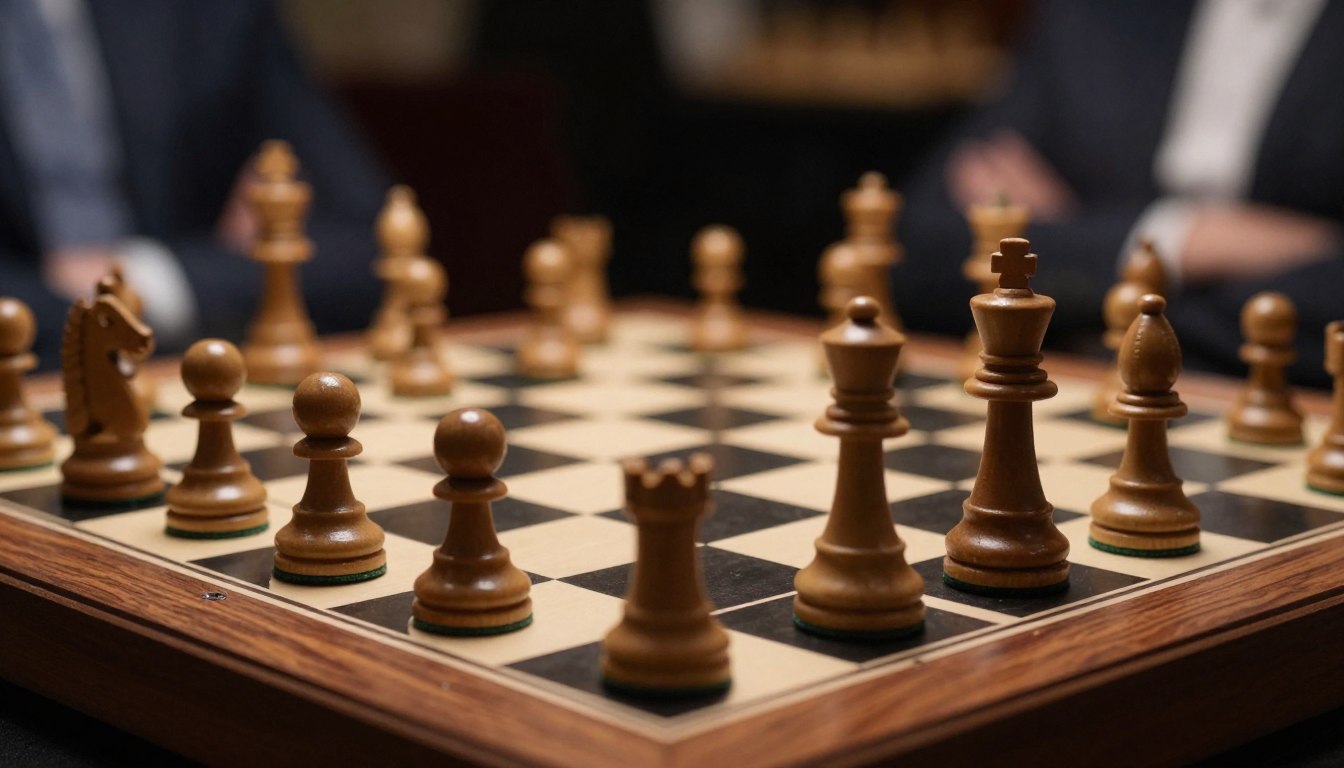
Understanding pawn formations is crucial for any chess player looking to improve their game. The arrangement of pawns on the board can significantly influence the outcome of a match, making it a vital aspect of chess strategy.
The way pawns are structured can either support or hinder the movement and development of other pieces. A well-planned pawn structure can provide a strong foundation for launching attacks and defending against opponents.
Mastering pawn structures is essential for chess success. It requires a deep understanding of how different formations can impact the game.
Understanding pawn structures is crucial for mastering chess strategy. Pawn structures refer to the configuration of pawns on the chessboard, which can significantly influence the game’s progression and outcome.
Pawns may seem like mere foot soldiers, but their arrangement can either bolster or undermine a player’s position. A well-considered pawn structure can enhance piece mobility, control key squares, and dictate the overall strategic direction.
Pawns are often underrated, yet they play a critical role in chess. They are the backbone of any chess position, influencing the mobility and effectiveness of other pieces. A pawn structure can either support or hinder the development and coordination of pieces.
For instance, pawns can control crucial central squares, block opponent pieces, or create barriers against enemy pawns. The way pawns are structured can also affect the safety of the king and the potential for pawn breaks.
The formation of pawns can dramatically shape the game’s landscape. Different pawn structures can lead to various strategic and tactical opportunities. For example, a pawn chain can lock down the center, while a pawn majority on the queenside can create a long-term advantage.
| Pawn Structure Type | Strategic Implication | Tactical Opportunities |
|---|---|---|
| Pawn Chain | Controls the center, blocks opponent pieces | Potential for pawn breaks, creating passed pawns |
| Pawn Majority | Creates a long-term advantage on the flank | Potential for creating a passed pawn, promoting to a queen |
| Isolated Pawn | Weakness that can be targeted by opponents | Opponents can attack the pawn, creating a strong initiative |
By understanding and effectively managing pawn structures, players can significantly enhance their chess strategy and improve their chances of success.
Understanding pawn structures is crucial for any chess player looking to improve their game. Pawn structures refer to the configuration of pawns on the chessboard, which can significantly influence the game’s dynamics. Different pawn formations can either strengthen or weaken a player’s position.
An isolated pawn is a pawn that has no friendly pawns on adjacent files. This type of pawn can be a weakness because it cannot be supported by other pawns and may become a target for the opponent. However, isolated pawns can also have dynamic potential by controlling important central squares.
Key considerations for isolated pawns:
Doubled pawns occur when two pawns of the same color are on the same file. This structure can result from a capture and often represents a concession or compromise. While doubled pawns can be weak, especially if they are isolated, they can also offer benefits like open lines for rooks.
Advantages and disadvantages of doubled pawns:
Pawn islands are groups of pawns that are separated from other pawns by files where there are no pawns. Fewer pawn islands generally indicate a more compact and potentially stronger pawn structure. A pawn majority, having more pawns on one side of the board than the opponent, can be a significant advantage, especially in the endgame.
A pawn chain is a row of pawns diagonally aligned, often used to control key squares and restrict opponent mobility. A phalanx refers to a formation where pawns are aligned horizontally, providing a solid front. Both structures are crucial for controlling the center and supporting piece development.
Key features of pawn chains and phalanxes:
Understanding the strategic power of center pawns is essential for any chess player looking to improve. Center pawns are crucial in controlling key squares and influencing the mobility of pieces.
Controlling the center with pawns is a fundamental principle in chess. It provides mobility and development opportunities for the pieces.
Effective center control allows for easier movement of pieces across the board and puts pressure on the opponent’s position. As Grandmaster John Nunn once said, “The center is the most important area of the board; controlling it gives a significant advantage.”
“The pawns are the soul of the game; they alone form the attack and defense.” –
Exchanging center pawns can lead to open lines and dynamic play. However, it can also weaken one’s control over the center.
| Exchange Scenario | Strategic Implication |
|---|---|
| Opening lines for pieces | Can lead to active play and development |
| Weakening central control | May allow opponent to dominate the center |
The hanging pawns structure can be both a strength and a weakness. It offers potential for a pawn break but can also become a target for the opponent.
Managing hanging pawns effectively requires understanding when to advance them and when to maintain their position.
In the realm of chess, wing pawns can be the key to unlocking a successful attack or defense. Wing pawn structures refer to the configuration of pawns on the queenside and kingside, which can significantly influence the game’s dynamics.
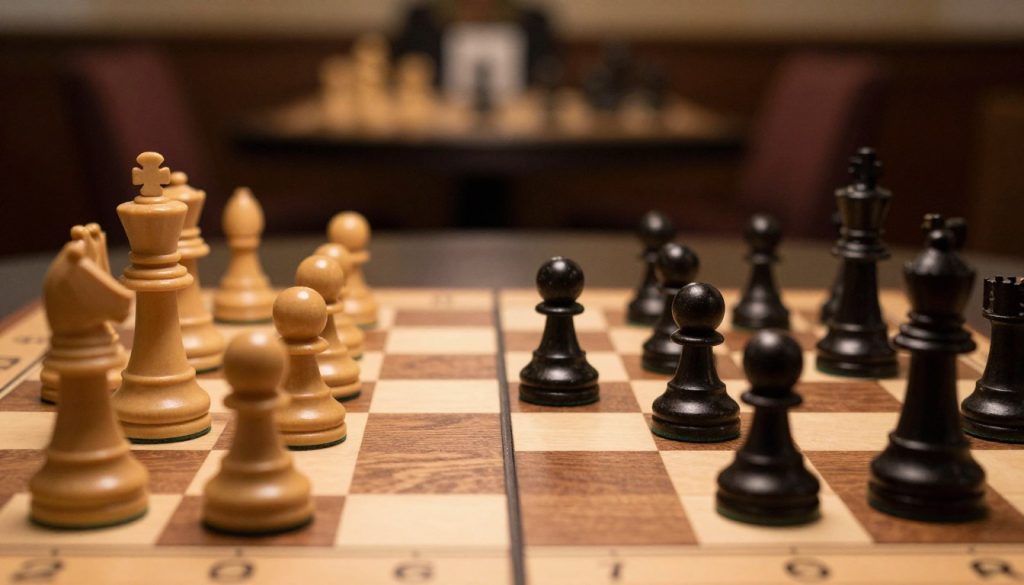
Understanding the tactical opportunities arising from these structures is crucial for players seeking to gain a strategic advantage.
A queenside pawn majority can be particularly powerful, as it often allows for the creation of a passed pawn on the queenside. This can divert the opponent’s pieces to the queenside, relieving pressure on the kingside.
Conversely, a kingside pawn storm can be an effective way to launch a direct attack on the opponent’s king. By advancing pawns on the kingside, players can create weaknesses in the opponent’s position and potentially deliver a decisive blow.
As grandmaster John Nunn once noted, “The key to a successful pawn structure is not just to advance pawns, but to do so in a way that creates weaknesses in the opponent’s position.” Identifying and exploiting these weaknesses is critical to converting a structural advantage into a win.
By mastering wing pawn structures and their tactical opportunities, players can significantly enhance their chess strategy and improve their overall game.
Understanding pawn structures is crucial for mastering opening theory in chess. The arrangement of pawns in the opening phase significantly influences the strategic and tactical possibilities that arise later in the game.
The Sicilian Defense is one of the most complex and aggressive openings, characterized by a distinct pawn structure. It typically arises after 1.e4 c5, leading to an asymmetrical pawn structure that offers Black dynamic counterplay.
The Sicilian Defense often results in asymmetrical pawn structures, where Black challenges White’s central control with …c5. This can lead to complex positions with counterplay on the queenside for Black and attacking chances on the kingside for White.
The French Defense, arising after 1.e4 e6, leads to a more solid and positional pawn structure. Black typically plays …d5, creating a closed center that can lead to strategic maneuvering.
The Queen’s Gambit is a popular opening that can result in various pawn structures, depending on Black’s response. Two notable structures are the Isolated Queen’s Pawn and the Carlsbad Structure.
The Isolated Queen’s Pawn (IQP) structure occurs when White has a pawn on d4 with no adjacent pawns on c4 or e4. This can provide central control and mobility for White’s pieces.
The Carlsbad Structure arises in certain variations of the Queen’s Gambit, characterized by pawns on c4 and d4 for White, opposed by …c6 and …d5 by Black. This structure often leads to minority attacks on the queenside.
| Opening | Pawn Structure Characteristics | Strategic Implications |
|---|---|---|
| Sicilian Defense | Asymmetrical, dynamic | Counterplay on queenside, attacking chances on kingside |
| French Defense | Solid, closed center | Strategic maneuvering, potential for counterattack |
| Queen’s Gambit (IQP) | Isolated pawn on d4 | Central control, piece mobility |
| Queen’s Gambit (Carlsbad) | Pawns on c4 and d4 vs …c6 and …d5 | Minority attack on queenside |
By understanding these pawn structures, players can better navigate the complexities of opening theory and improve their overall chess strategy.
Transforming pawn structures during the middlegame is a key skill that separates novice players from grandmasters. As players navigate the complexities of the game, understanding how to manipulate pawn structures can significantly impact the outcome.
Strategic pawn breaks are crucial for challenging the opponent’s position and creating counterplay. A well-timed pawn break can open lines for pieces to attack and disrupt the opponent’s pawn structure. For instance, in many Sicilian Defense lines, Black’s pawn break on d5 is a thematic move that challenges White’s central control.
Creating passed pawns is another vital aspect of middlegame strategy. A passed pawn is a powerful asset, as it has the potential to promote to a queen if supported properly. The process of creating a passed pawn often involves careful planning and sometimes requires sacrificing other pawns or pieces to achieve the desired structure.
| Pawn Structure | Strategic Goal | Typical Move |
|---|---|---|
| Central Pawns | Control the Center | d4 or e4 |
| Wing Pawns | Create Passed Pawns | a4 or h4 |
Sacrificing pawns to achieve a positional advantage is a sophisticated middlegame strategy. By giving up material, a player can gain a strategic initiative or improve their piece activity. For example, the Volga Gambit involves Black sacrificing a pawn to put pressure on White’s position and gain active play.
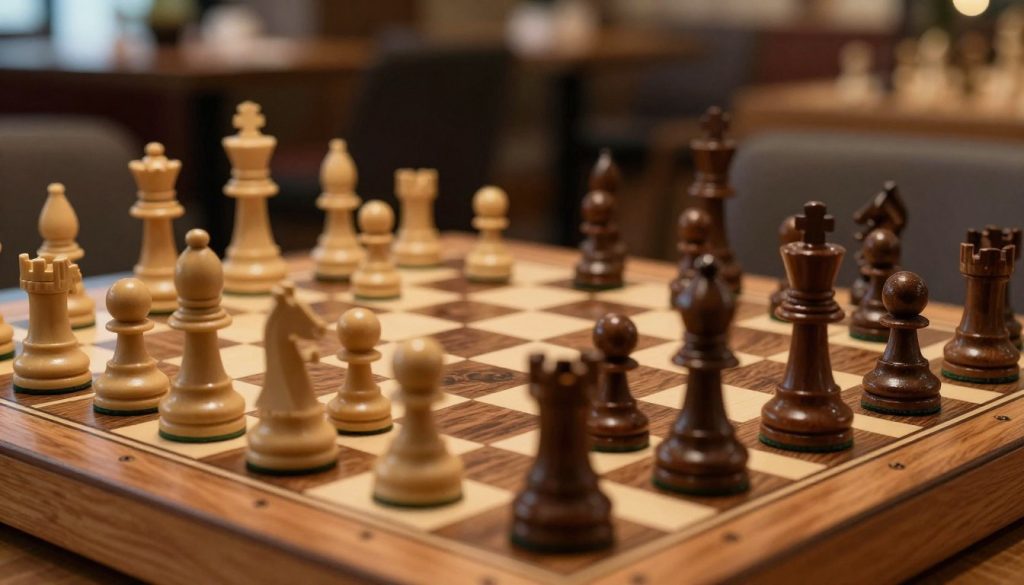
In conclusion, mastering the transformation of pawn structures during the middlegame is essential for chess success. By understanding strategic pawn breaks, creating passed pawns, and knowing when to sacrifice pawns for positional advantage, players can significantly enhance their middlegame strategy.
Pawn structure mistakes can significantly impact the outcome of a game, making it essential to identify and avoid them. Effective management of pawn structures is a critical aspect of chess strategy that can greatly influence the game’s outcome.
One common mistake is advancing pawns too quickly. This can lead to weakened pawn structures that are difficult to defend. For instance, advancing a pawn in front of a castled king can expose the king to potential attacks. As Grandmaster John Nunn once said, “Pawns are like the nails that hold the ship together; if they’re not placed correctly, the whole structure can fall apart.”
Another critical error is neglecting to consider the opponent’s pawn structure plans. Understanding the opponent’s strategy can help you anticipate and counter their moves effectively. Failing to do so may result in being outmaneuvered.
Lastly, failing to adapt to changes in the pawn structure during the game can be detrimental. As the game progresses, the pawn structure often undergoes significant changes. Being inflexible and failing to adjust your strategy accordingly can lead to missed opportunities and a weakened position.
By being aware of these common mistakes and taking steps to avoid them, players can significantly improve their game. As former World Chess Champion, José Capablanca, noted, “The pawns are the soul of chess; they alone form the attack and defense.”
In the endgame, the strategic manipulation of pawn structures can make all the difference between victory and defeat. As players transition into this critical phase, understanding how to leverage pawn structures becomes paramount.
King and pawn endgames are among the most common endgame scenarios. The ability to convert a pawn advantage into a win is a fundamental skill that every chess player must master. This involves not just advancing pawns but doing so in a way that takes into account the opponent’s king position and potential counterplay.
Connected passed pawns are a powerful force in the endgame. They are particularly potent when supported by the king, as they can create a decisive advantage. The strategy involves advancing these pawns in coordination with the king to promote one of them to a queen.
Converting a structural advantage into a win requires precise play. This involves creating passed pawns, utilizing the king effectively, and sometimes sacrificing material to achieve a higher goal. Understanding how to maneuver pawns and the king to outmaneuver the opponent is crucial.
By mastering these endgame strategies, players can significantly improve their chances of winning. The key lies in understanding the nuances of pawn structures and how they interact with other pieces, particularly the king.
By examining master games, we can glean valuable insights into the importance of pawn structures in achieving chess success. The strategic handling of pawns is a critical aspect that distinguishes great players from others.
José Capablanca, a World Chess Champion, was renowned for his positional style, particularly his mastery of pawn structures. His games often featured harmonious pawn formations that controlled key squares and limited his opponents’ mobility.
Anatoly Karpov, another World Chess Champion, exemplified the power of strategic pawn play. His approach was characterized by prophylactic thinking, where he would often maneuver to prevent his opponents from achieving favorable pawn structures.
Modern chess has seen significant innovations in pawn structure strategies, with players like Magnus Carlsen pushing the boundaries. Carlsen’s games often feature complex pawn structures that require deep understanding and precise play.
| Champion | Notable Trait | Example |
|---|---|---|
| Capablanca | Harmonious Pawn Formations | Capablanca – Marshall, 1918 |
| Karpov | Prophylactic Thinking | Karpov – Korchnoi, 1978 |
| Carlsen | Complex Pawn Structures | Carlsen – Caruana, 2018 |
Analyzing these master games provides valuable lessons in pawn structure strategy, highlighting the importance of adaptability and deep understanding in achieving chess success.
Mastering pawn structures is a crucial step in improving your chess skills. By understanding how to effectively manage and manipulate pawns, you can significantly enhance your overall game strategy.
Pawn structure mastery allows you to control key areas of the board, create weaknesses in your opponent’s position, and execute powerful pawn breaks. As discussed in the previous sections, various pawn structures, such as isolated pawns, doubled pawns, and pawn chains, play a critical role in determining the outcome of a game.
To take your chess to the next level, focus on developing a deeper understanding of pawn structures and their impact on the game. Analyze master games, practice different pawn formations, and apply the strategies discussed in this article to improve your skills.
By combining pawn structure mastery with other essential chess skills, you can become a more formidable player, capable of outmaneuvering opponents and achieving success in tournaments and casual games alike. Improving chess skills requires dedication and practice, but with a solid grasp of pawn structures, you’ll be well on your way to elevating your game.
A pawn structure refers to the configuration of pawns on the chessboard, which can significantly influence the game’s strategic direction and outcome.
Pawn structures are crucial because they can affect the mobility of pieces, control of key squares, and overall strategic direction, ultimately impacting the game’s outcome.
Isolated pawns are pawns that are not supported by other pawns on adjacent files. They can be weak and vulnerable to attack, but in some cases, they can also provide mobility and flexibility for the pieces.
Center pawns play a critical role in controlling key central squares, which can dictate the flow of the game and provide a strong foundation for piece development.
Pawn breaks are strategic advances of pawns to gain space, challenge the opponent’s position, or create weaknesses. They can be crucial in transforming pawn structures and gaining a strategic advantage.
In the endgame, pawn structures can determine the outcome of the game, particularly in king and pawn endgames, where the presence of connected passed pawns can be decisive.
Common mistakes include advancing pawns too quickly, neglecting the opponent’s structural plans, and failing to adapt to changes in the pawn structure.
To improve, study master games, analyze pawn structures in different openings, and practice transforming pawn structures during the middlegame to gain a strategic advantage.