Physical Address
304 North Cardinal St.
Dorchester Center, MA 02124
Physical Address
304 North Cardinal St.
Dorchester Center, MA 02124


Understanding the intricacies of chess strategy can be a game-changer for players looking to improve their skills. One particular aspect that can make or break a player’s success is identifying the most effective opening move.
The best move in chess is often overlooked, even by experienced players. This oversight can lead to missed opportunities and a weaker position on the board.
By grasping the significance of this move, players can significantly enhance their chances of winning and take their game to the next level.
Chess mastery remains an elusive goal for many players, requiring a blend of skill, knowledge, and intuition. While many players dedicate themselves to studying chess, the leap from amateur to grandmaster involves more than just memorizing moves.
The distinction between amateur and grandmaster lies in their approach to the game. Grandmasters possess a deep understanding of chess strategies, allowing them to anticipate and counter their opponents’ moves effectively. A key factor in this distinction is pattern recognition, which enables grandmasters to recall and apply complex patterns from past games.
Pattern recognition is crucial in chess excellence, as it allows players to quickly identify and respond to familiar patterns on the board. This skill is developed through extensive study and practice, enabling grandmasters to make informed decisions during games. According to former World Chess Champion, José Capablanca,
“The key to winning is to develop a deep understanding of the game, which allows you to anticipate your opponent’s moves.”
| Skill Level | Pattern Recognition Ability | Strategic Understanding |
|---|---|---|
| Amateur | Limited | Basic |
| Grandmaster | Advanced | Deep |
By enhancing pattern recognition and strategic understanding, players can bridge the gap between amateur and grandmaster levels, ultimately achieving chess excellence.
Defining the best move in chess requires a deep dive into the nuances of the game, including objective analysis and subjective interpretation. The complexity of this task lies in the multifaceted nature of chess, where strategy, context, and player expertise interplay.
Evaluating the best move in chess involves both objective and subjective assessments. Objective evaluation relies on concrete, measurable factors such as material gain, control of the center, and pawn structure. On the other hand, subjective evaluation is influenced by a player’s style, experience, and intuition. As Grandmaster John Nunn once said, “The best move is not always the most obvious one; it’s the one that aligns with your strategic understanding.”
“The best move is not always the most obvious one; it’s the one that aligns with your strategic understanding.” – John Nunn
The context of the game significantly influences the evaluation of the best move. Factors such as the current position on the board, the stage of the game (opening, middlegame, or endgame), and the opponent’s strategy all play crucial roles. For instance, a move that is advantageous in the opening might be detrimental in the endgame. As context dependency highlights, the best move is not made in isolation but is deeply rooted in the overall strategy and the dynamics of the game.
Understanding the interplay between objective and subjective evaluations, as well as the context in which moves are made, is crucial for identifying the best move in chess. This nuanced approach allows players to make informed decisions that enhance their strategic prowess.
In the realm of chess, a prophylactic move is a strategic gem that often goes unnoticed by amateur players. It’s a move that doesn’t directly attack or defend but instead prevents the opponent from executing their plan. This subtle yet powerful concept is a hallmark of grandmaster-level play.
Prophylactic thinking involves anticipating the opponent’s potential moves and countering them before they become a threat. It’s about taking control of the game by being one step ahead. As Aron Nimzowitsch, a pioneer of prophylactic thinking, once said, “The threat is stronger than the execution.” This mindset is crucial in modern chess.
“A good prophylactic move is like a good preventive measure in medicine; it stops the problem before it starts.”
A prophylactic move is a strategic decision made by a player to neutralize potential threats before they materialize. It’s not about launching a direct attack but rather about securing a strategic advantage by limiting the opponent’s options. For instance, a player might play a move that appears passive but actually prevents the opponent from developing a piece or controlling a key square.
Throughout chess history, grandmasters have employed prophylactic moves to outmaneuver their opponents. One famous example is the game between Tigran Petrosian and Boris Spassky, where Petrosian, known for his defensive prowess, used prophylactic thinking to win. The table below highlights key moves from that game:
| Move Number | White (Petrosian) | Black (Spassky) |
|---|---|---|
| 12 | Nd2 | Nf6 |
| 15 | b3 | a5 |
| 18 | a4 | b6 |
Prophylactic moves are often considered the best move because they address potential problems before they arise. By doing so, a player can maintain a strategic advantage while minimizing risk. As grandmaster John Nunn noted, “The best move is often not the one that attacks, but the one that prevents the opponent from attacking.”
In conclusion, prophylactic moves are a sophisticated aspect of chess strategy that can significantly enhance a player’s game. By understanding and incorporating prophylactic thinking, players can improve their overall performance and gain a deeper appreciation for the nuances of chess.
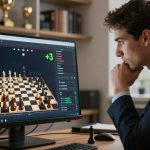
The advent of powerful chess engines has revolutionized the way we analyze chess positions. Modern chess engines have become essential tools for players looking to improve their game by understanding the best moves in various situations.
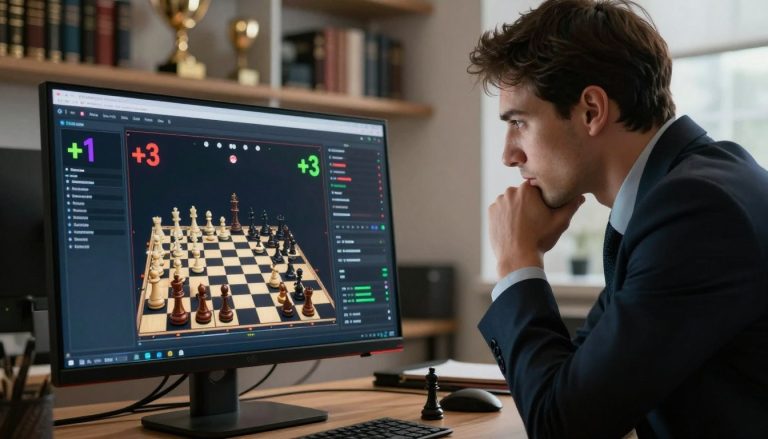
Chess engines evaluate positions by analyzing millions of possible moves per second. They use complex algorithms to assess the strengths and weaknesses of each position, providing a score that represents the advantage of one side over the other. This process involves deep calculation and positional understanding, allowing engines to suggest the best moves.
Stockfish, one of the strongest open-source chess engines, has a unique perspective on prophylactic moves. Prophylactic thinking is about preventing your opponent’s plans rather than just executing your own. Stockfish evaluates these moves based on their impact on the position.
Stockfish calculates variations deeply, often looking 20-30 moves ahead in complex positions. This depth allows it to identify subtle prophylactic moves that might be missed by human players.
Beyond calculation depth, Stockfish has a sophisticated positional understanding. It can assess the strategic and tactical implications of prophylactic moves, helping players understand why certain moves are considered best.

While chess engines are incredibly powerful, they are not without limitations. Engines can struggle with certain types of positions, such as those involving long-term strategic plans or highly complex endgames. Additionally, engines may not always understand the psychological aspect of the game, such as steering the game into a type of position that is more familiar or comfortable for the player.
Understanding these limitations is crucial for players who use engine analysis as part of their training. By combining engine insights with human intuition and strategic understanding, players can make more informed decisions at the board.
Chess players frequently overlook the optimal move because of inherent psychological barriers and a tendency towards aggressive play. This inclination towards aggression often overshadows the more subtle, yet powerful, prophylactic moves.
Cognitive biases play a significant role in chess decision-making, leading players away from the best move. Biases such as confirmation bias and anchoring bias can distort a player’s judgment, causing them to favor moves that align with their preconceived notions rather than the objectively best move.
Many players are drawn to aggressive moves because they offer a sense of initiative and control. Attacking play can be thrilling and is often associated with creativity and brilliance. However, this attraction can lead players to overlook defensive or prophylactic moves that might be more effective in the long run.
Achieving defensive excellence in chess is challenging due to several psychological barriers. Two significant obstacles are the fear of passivity and the misunderstanding of initiative.
Players often fear being passive, associating it with weakness. However, true strength in chess lies in understanding when to be proactive and when to adopt a more defensive stance. Prophylactic thinking allows players to anticipate and prevent opponents’ plans, which can be a powerful strategy.
The concept of initiative is often misunderstood. While having the initiative can be advantageous, it’s not always the most critical factor. Sometimes, ceding the initiative temporarily can lead to a stronger position in the long term, as it allows for a more profound understanding and preparation for the ensuing positions.
Understanding these psychological barriers and cognitive biases can help players improve their chess by making more informed decisions. By recognizing the value of prophylactic moves and defensive strategies, players can elevate their game and achieve better outcomes.
Chess players who excel in prophylaxis often outmaneuver their opponents, as demonstrated by several iconic games. This section will explore the prophylactic brilliance of legendary chess champions and modern grandmasters.
Tigran Petrosian, known as the “Iron Tigran” for his defensive prowess, was a master of prophylactic play. His ability to anticipate and counter opponents’ plans was unparalleled. One notable example is his World Championship match against Boris Spassky, where Petrosian’s prophylactic strategies played a crucial role in securing his title.
Petrosian’s games are still studied by chess players worldwide for their strategic depth and defensive solidity.
Anatoly Karpov, another World Champion, was renowned for his positional style and prophylactic thinking. Karpov’s approach was to prevent his opponents from launching effective attacks, thereby gradually gaining a strategic advantage.
His games against Viktor Korchnoi showcased Karpov’s mastery of prophylaxis, where he skillfully neutralized Korchnoi’s aggressive attempts.
In modern chess, prophylactic thinking remains a vital skill. Top players continue to innovate and refine their preventive strategies.
Magnus Carlsen, the current World Champion, often employs prophylactic strategies to outmaneuver his opponents. His deep understanding of positional play allows him to anticipate and counter threats effectively.
Fabiano Caruana is another top grandmaster known for his comprehensive chess skills, including prophylaxis. Caruana’s games often feature subtle preventive measures that catch his opponents off guard.
Improving at chess requires more than just knowing the rules; it demands the ability to anticipate and prevent your opponent’s plans. Prophylactic thinking is a crucial skill that can be developed through specific exercises and training methods.
To enhance your prophylactic thinking, you can engage in the following exercises:
Analyze a chess position without making any moves. Try to understand the potential threats and opportunities for both sides. This exercise helps in developing your ability to anticipate and react to different scenarios.
Practice identifying potential threats from your opponent’s position. This involves understanding their piece development, pawn structure, and potential attacking or defending strategies.
Using chess engines like Stockfish can significantly enhance your training. Engine analysis can help you understand complex positions and identify prophylactic moves that you might have missed. By reviewing engine suggestions, you can improve your ability to anticipate and counter your opponent’s plans.
A balanced strategic approach involves combining prophylactic thinking with other chess strategies. It’s about understanding when to be defensive and when to launch an attack. By integrating engine analysis and practicing specific exercises, you can develop a more nuanced understanding of the game.
Improving chess is a continuous process that requires patience, practice, and the right training methods. By focusing on prophylactic thinking and engine analysis, you can significantly enhance your skills.
To elevate your chess game, it’s crucial to integrate prophylactic thinking into your strategy. This approach involves anticipating and preventing your opponent’s plans, thereby gaining a strategic advantage.
Prophylactic thinking can be applied across various phases of the game, from the opening to the endgame. By doing so, you can improve your overall chess performance and make more informed decisions during games.
In the opening phase, prophylactic thinking involves selecting moves that not only develop your pieces but also anticipate and counter your opponent’s potential plans. This can include moves that control key squares, prevent opponent piece development, or prepare for potential pawn breaks.
For example, the Ruy Lopez opening is a popular choice among chess players. It allows for quick development and control of the center while also preparing to potentially restrict Black’s piece mobility.
During the middlegame, prophylactic thinking becomes even more critical as the position becomes more complex. Players should focus on identifying potential threats and taking preventive measures. This might involve maneuvering pieces to more effective squares, exchanging off potentially dangerous opponent pieces, or creating pawn structures that limit opponent mobility.

A key aspect of middlegame prophylaxis is understanding the strategic and tactical motifs that could arise. By anticipating these, a player can take steps to neutralize potential threats before they become critical.
In the endgame, prophylactic thinking continues to play a vital role. Players should aim to prevent their opponent from creating counterplay or promoting pawns. This can involve techniques such as creating a “passed pawn” on the correct file or using the king to block opponent pawns.
| Phase | Prophylactic Strategy | Example |
|---|---|---|
| Opening | Control key squares, prevent opponent development | Ruy Lopez |
| Middlegame | Maneuver pieces, exchange dangerous pieces | Repositioning knights to more active squares |
| Endgame | Prevent counterplay, promote pawns | Creating a passed pawn on the correct file |
By incorporating prophylactic thinking into your chess strategy across all phases of the game, you can significantly enhance your performance and gain a competitive edge.
Understanding and employing prophylactic moves is crucial for improving chess skills. By focusing on strategic prevention, players can significantly enhance their game, making it harder for opponents to launch a successful attack.
The best move in chess is often not the most aggressive one but the one that prevents the opponent’s plans from unfolding. This approach requires a deep understanding of the game and the ability to anticipate potential threats.
By incorporating prophylactic thinking into their strategy, players can improve their overall chess performance. This involves not just reacting to the opponent’s moves but also anticipating and preventing their plans.
To master strategic prevention, it’s essential to practice and integrate prophylactic moves into your training regimen. This will help you develop a more nuanced understanding of the game and improve your ability to make the best move in chess.